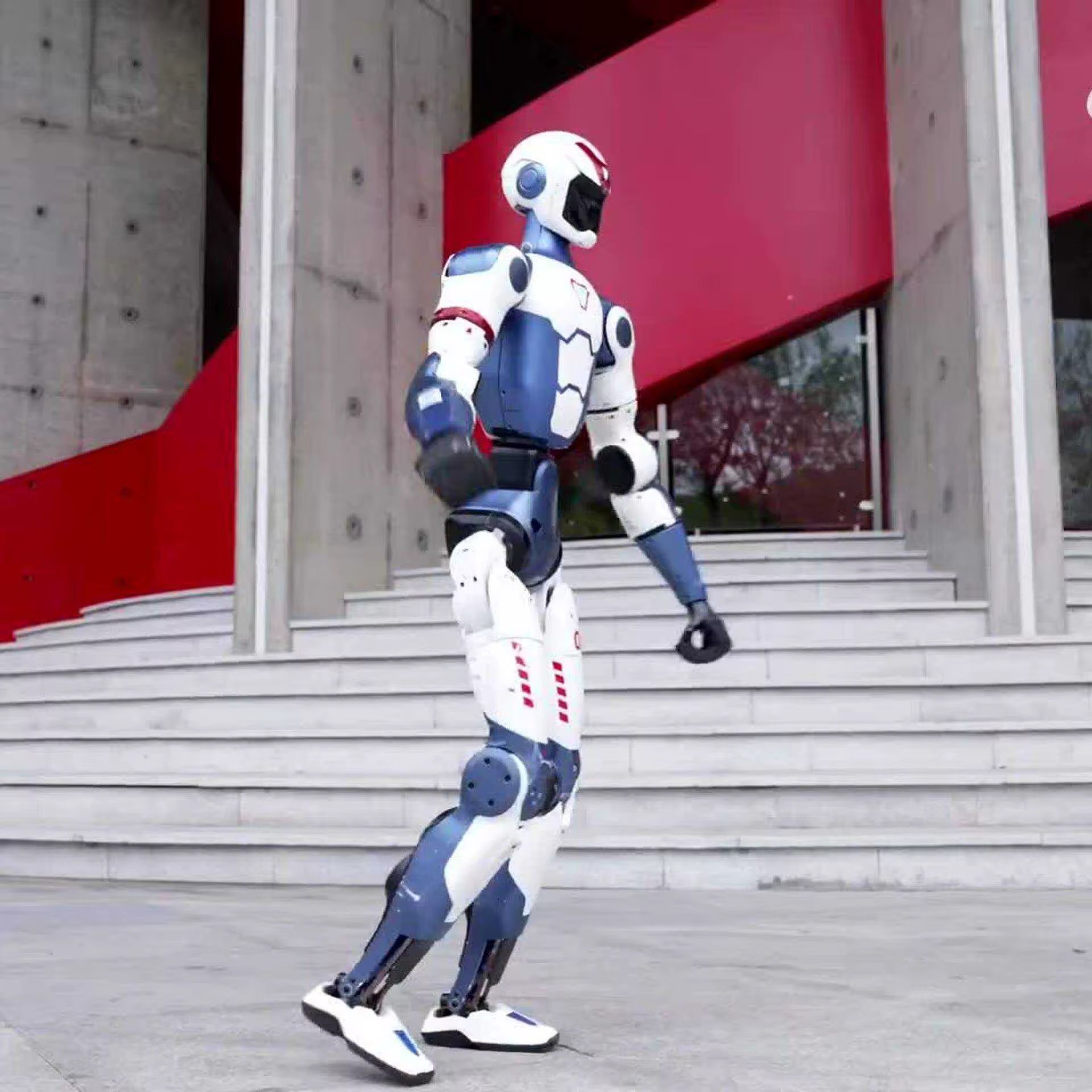
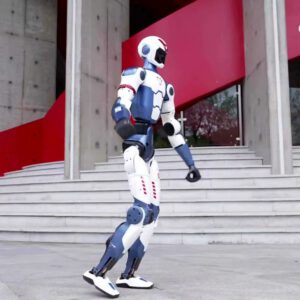
· Highly dynamic movements: can complete difficult movements such as running, dancing, and even back flipping, which is suitable for reception, performance or scientific research platform.
· Fine operation: Arms and hands can accurately grasp small objects or use tools, which can be applied to home services, medical assistance or industrial assembly.
· Adaptation to complex terrain: able to go up and down stairs, cross obstacles, and be competent in patrol, rescue and other tasks.
· Human-computer collaboration safety: Through joint torque control and other technologies, the impact force can be reduced during collision, which is suitable for working with humans.
2. Personalized appearance design: improve acceptance and functionality
· Enhance affinity: It can imitate real people or specific cartoon images, which makes people feel intimate, and is more acceptable when used in old-age care, education and other scenarios.
· Identity customization: Enterprises can integrate their own elements as image representatives, and individuals can also customize the appearance of their partners or idols.
· Functional guidance design: appearance (such as multi-mimetic screens, lights) can intuitively prompt the current state or mood of the robot and reduce learning costs.
· Emotional interaction: It can express facial expressions and actions to make the interaction more natural, which is used for psychological comfort or child companionship.
In general, flexible movement solves the problem of “what can be done” and broadens the physical ability of robots; personalized appearance solves the problem of “how to be accepted and perceived”, making robots easier to integrate into human society. The combination of the two makes R1 have great potential in services, medical care, education and other fields.
Reviews
There are no reviews yet.