📌 I. Highlights of core functions
These robots mainly solve the pain point of “difficult to recruit people and difficult to unify standards” in shopping malls:
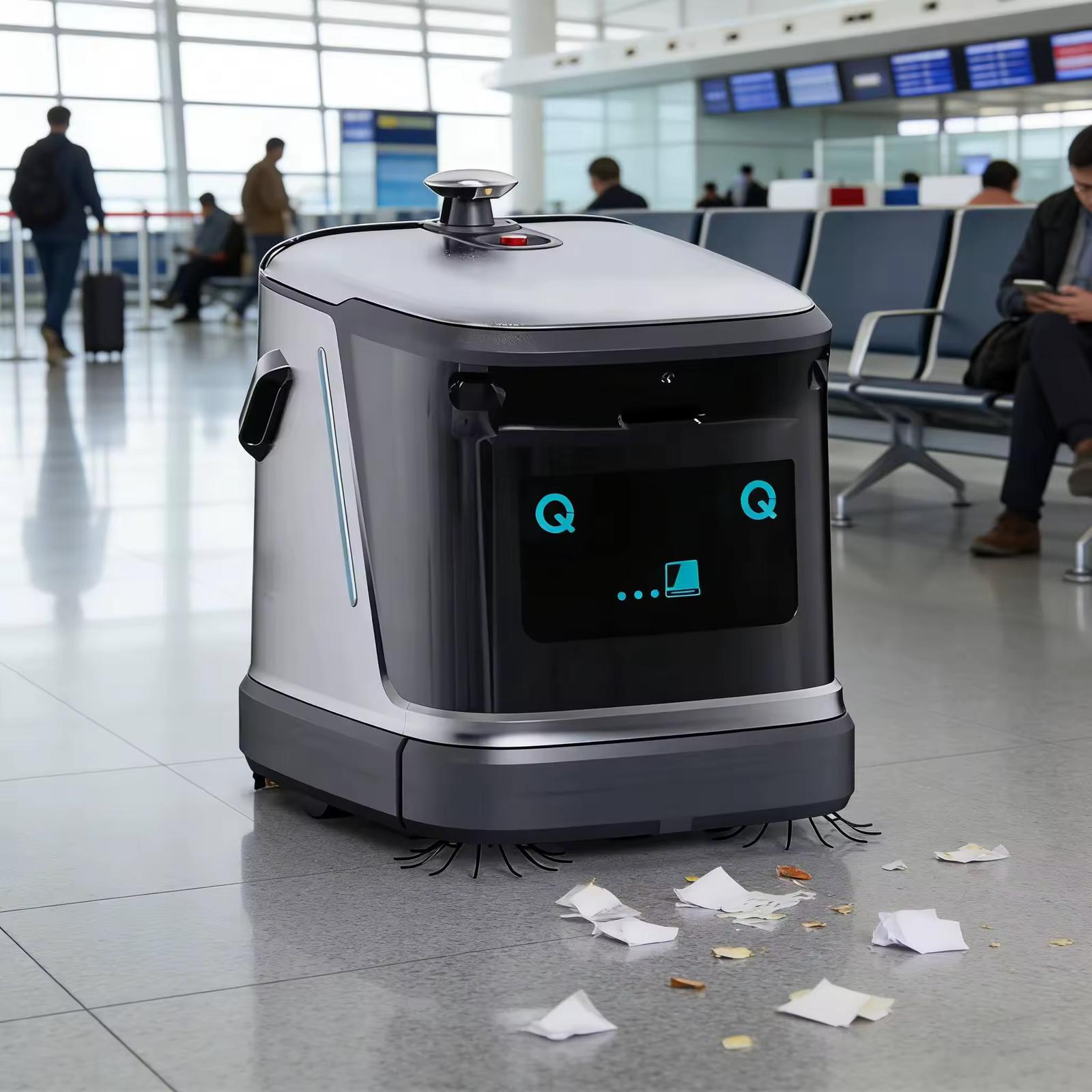
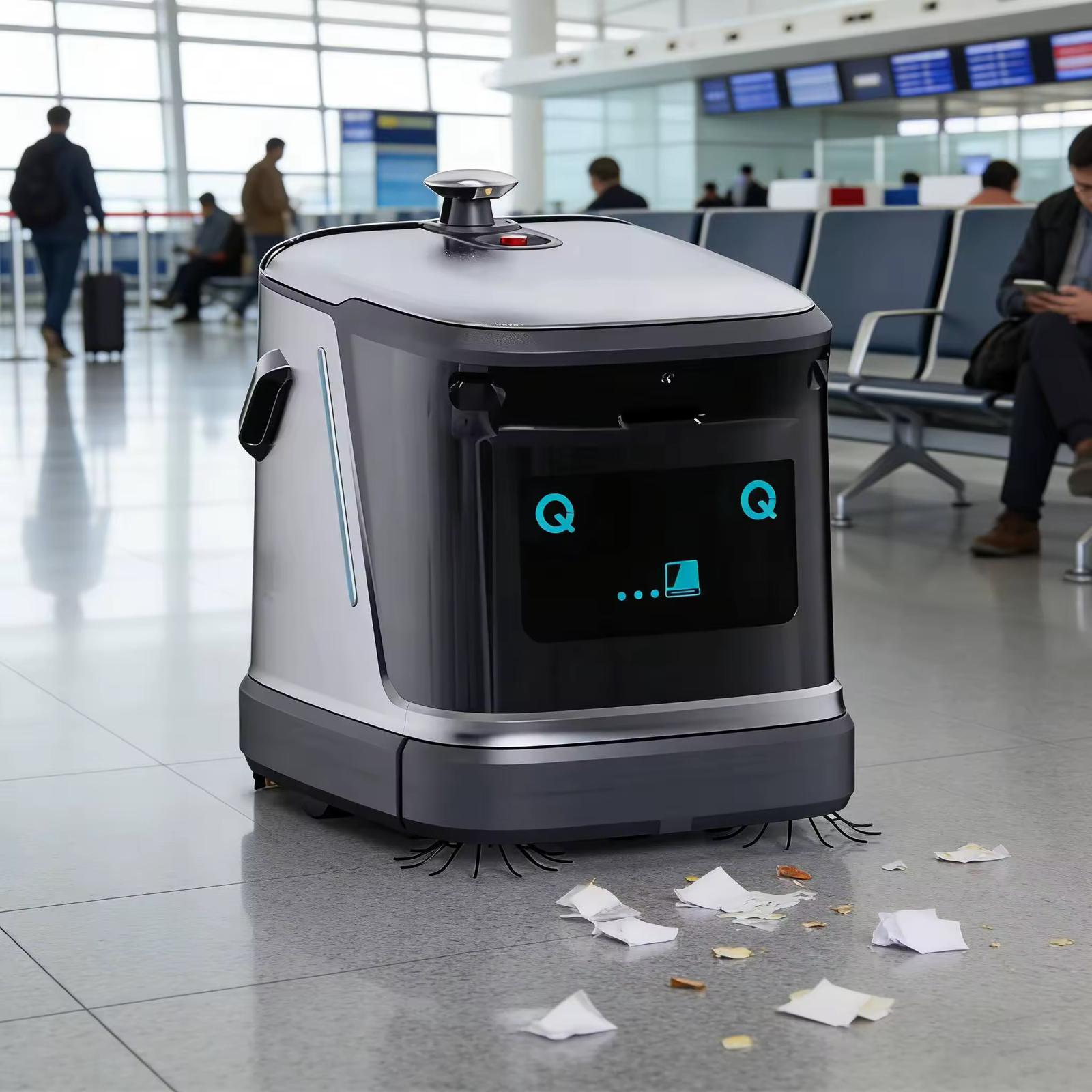
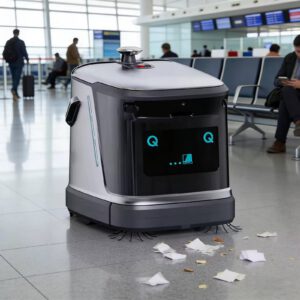
· All-round “three-in-one” cleaning: no longer just sweeping, mainstream models have integrated sweeping, washing, mopping and sucking, and can even recycle small garbage at the same time. Some flagship models have a suction power of up to 15000Pa, which can suck out coins and stones.
· Centimeter-level precise obstacle avoidance: multi-sensor fusion technology of lidar + 3D vision + ultrasound. It can accurately identify and bypass pedestrians, trolleys and even baby seats, realizing “human-machine coexistence” without the risk of collision.
· Real “unmanned” duty: supports automatic recharge (automatic return of low power), automatic addition/drainage (automatic water change with workstation), and can also link elevators and gates for autonomous cross-floor operation.
· AI dirt identification and inspection: Robots not only perform tasks, but also take the initiative to find garbage. After oil stains and water stains are found, the path will be automatically adjusted for cleaning; if you encounter large garbage, it will be reported to the cleaner for handling.
· Visual data management: Managers can view the cleaning report (area, duration, water consumption) through mobile phones or computer APPs, and support scheduled tasks and remote scheduling.
🏢 II. Practical application of shopping scenarios
For different areas of the mall, the deployment strategy of robots is also different:
· Large public areas (atriums, corridors): This is the most efficient place for robots. Large robots (such as Gaoxian Scrubber 50) are responsible for large-scale dust pushing, and one robot can cover the workload of 4-6 people. Support breakpoint continuation scanning, and automatically return to the interrupted position to continue working after charging.
· Narrow aisle and in-store: A small robot (at least through the 550mm channel) can go deep into the bottom of the cafe table and chair or the narrow aisle of the boutique. The operating noise is usually less than 70dB, and the use during business hours does not affect the conversation with customers.
· Underground garage and peripheral square: The garage model is equipped with an oil removal mode and a powerful brush plate to deal with tire marks and oil stains. The sturdy fuselage can cope with the stone floor and slope of the outdoor square.
· Three-dimensional space such as the bathroom: The new robot is even equipped with a robotic arm, which can pick up the rag to clean the washstand, mirror and compartment door panel, breaking through the limitation of only sweeping the floor.
📌 I. Highlights of core functions
These robots mainly solve the pain point of “difficult to recruit people and difficult to unify standards” in shopping malls:
· All-round “three-in-one” cleaning: no longer just sweeping, mainstream models have integrated sweeping, washing, mopping and sucking, and can even recycle small garbage at the same time. Some flagship models have a suction power of up to 15000Pa, which can suck out coins and stones.
· Centimeter-level precise obstacle avoidance: multi-sensor fusion technology of lidar + 3D vision + ultrasound. It can accurately identify and bypass pedestrians, trolleys and even baby seats, realizing “human-machine coexistence” without the risk of collision.
· Real “unmanned” duty: supports automatic recharge (automatic return of low power), automatic addition/drainage (automatic water change with workstation), and can also link elevators and gates for autonomous cross-floor operation.
· AI dirt identification and inspection: Robots not only perform tasks, but also take the initiative to find garbage. After oil stains and water stains are found, the path will be automatically adjusted for cleaning; if you encounter large garbage, it will be reported to the cleaner for handling.
· Visual data management: Managers can view the cleaning report (area, duration, water consumption) through mobile phones or computer APPs, and support scheduled tasks and remote scheduling.
🏢 II. Practical application of shopping scenarios
For different areas of the mall, the deployment strategy of robots is also different:
· Large public areas (atriums, corridors): This is the most efficient place for robots. Large robots (such as Gaoxian Scrubber 50) are responsible for large-scale dust pushing, and one robot can cover the workload of 4-6 people. Support breakpoint continuation scanning, and automatically return to the interrupted position to continue working after charging.
· Narrow aisle and in-store: A small robot (at least through the 550mm channel) can go deep into the bottom of the cafe table and chair or the narrow aisle of the boutique. The operating noise is usually less than 70dB, and the use during business hours does not affect the conversation with customers.
· Underground garage and peripheral square: The garage model is equipped with an oil removal mode and a powerful brush plate to deal with tire marks and oil stains. The sturdy fuselage can cope with the stone floor and slope of the outdoor square.
· Three-dimensional space such as the bathroom: The new robot is even equipped with a robotic arm, which can pick up the rag to clean the washstand, mirror and compartment door panel, breaking through the limitation of only sweeping the floor.
Reviews
There are no reviews yet.